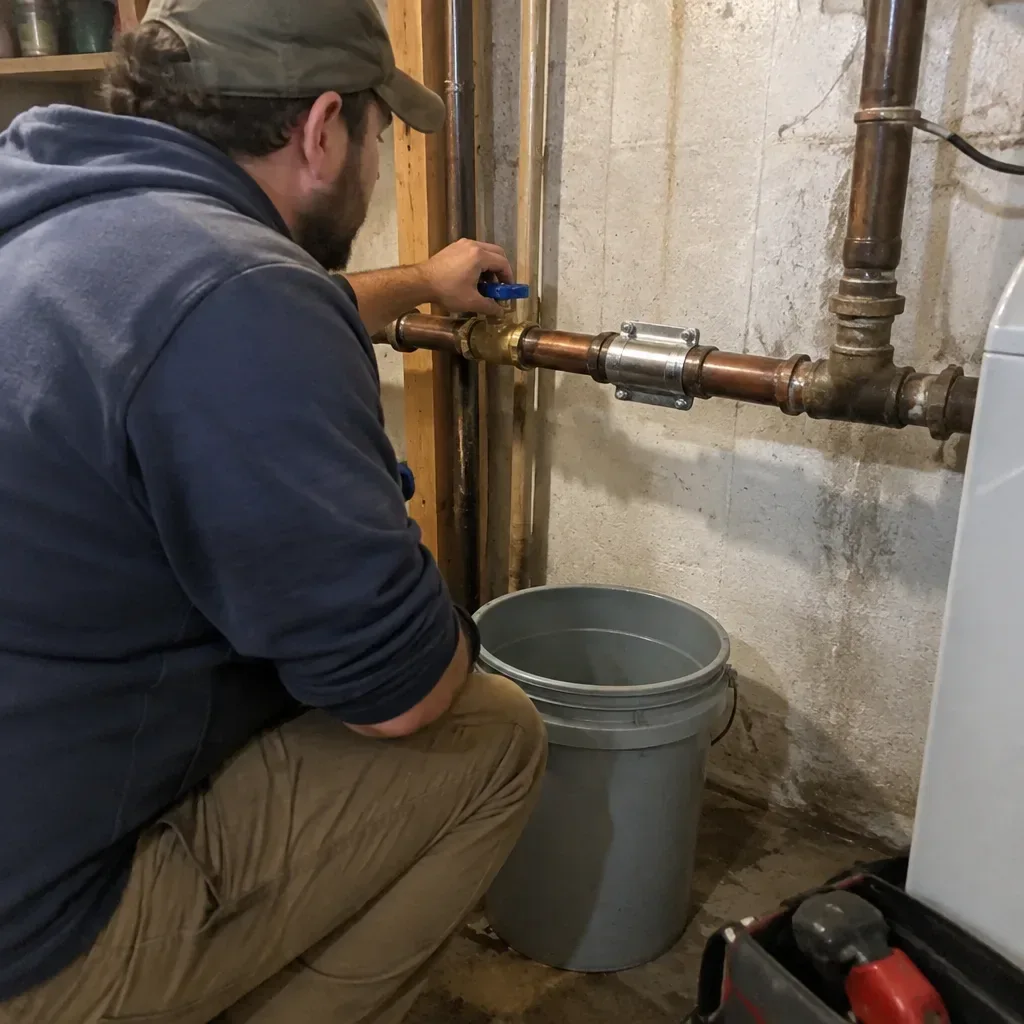
Pipe Repair Clamps for Brockton Homes
Check for electrical danger first, then consider whether the pipe and damage fall within the clamp maker’s limits.
A repair clamp can seal a burst pipe when its sealing surface covers the opening and the product fits the pipe and operating conditions. Use it only within the maker’s limits; restricted-use clamps, unsuitable damage, or a returning leak make it temporary. A damaged section may need replacement.
Check Electrical Safety First
If a supply pipe opens, first decide whether you can reach the shutoff without crossing water or reaching past energized equipment. In Brockton, as anywhere, leave the area and get appropriate help if the route is unsafe; never handle a wet switch or appliance. A burst pipe repair clamp is a banded fitting that presses a sealing surface against an opening, but choosing one comes after you can safely assess the situation.
A Brockton homeowner may see a metal band or housing drawn around an exposed line by bolts or other fasteners. Inside, a gasket or sealing pad is meant to press against the pipe and cover the leak. The seal depends on that surface sitting evenly against the pipe, not simply on tightening the hardware. A clamp that rocks, sits crooked, or leaves part of the opening uncovered is not making the contact its design requires.
The pipe’s material and outside diameter narrow the choices. A water pipe clamp made for one size or system may not suit another, even when it appears to wrap around the line. In Brockton, whether a home is near North Common or South Common does not tell you what pipe is installed; check the exposed line and the product details. Copper, PEX, and CPVC systems have different requirements, so verify compatibility before selecting a clamp.
Understand the Clamp’s Seal
A snug-looking fit does not tell you whether the clamp can handle the line’s operating conditions. Read its pressure rating and compare it with the manufacturer’s stated limits for the pipe and intended use. If those details are missing or unclear, do not assume the fasteners can make up the difference. In Brockton, pressure and pipe details still matter when the leak is in an accessible basement or utility space.
Next, compare the break itself with the gasket’s coverage. A small opening contained within the sealing surface is different from a long split that extends past its edges. A crushed, bent, or uneven pipe can also prevent steady contact. In a Brockton home, look at the full damaged area rather than judging by the first spot where water shows; moisture can run along a pipe before it drips.
Follow the clamp maker’s instructions for placement, surface condition, and approved uses. Some products are intended for restricted or emergency service, and the label sets the boundary for how they may be used. Do not improvise an installation in a cramped or wet location where you cannot work safely. A house near Veterans Memorial Trail still needs the same careful check of the actual product and pipe conditions.
Know When Use Is Unsafe
Even with the water supply shut off, a wet basement, utility area, or room with electrical equipment can be unsafe to enter. Only operate a valve you can reach and use safely; if you cannot, keep clear and seek appropriate help. Water may travel from a concealed line before appearing on a ceiling or floor, so a visible damp patch does not make the source safe to approach. In Brockton, put distance between yourself and electrical hazards first.
A clamp needs room to sit squarely around the pipe, with access to its fasteners and a suitable surface beneath the seal. If reaching the damaged spot means climbing into a wet ceiling space, moving electrical equipment, or handling a live wet fixture, stop. A label cannot make an unsafe work area safe. The pros we connect you with can assess visible water pipe repair; drying and rebuilding after water damage are separate work.
Treat a Clamp as Temporary
A repair clamp may be unsuitable when the split runs beyond its sealing pad, the pipe is deformed, or the damage meets a joint. Watch for water emerging beside the clamp or returning around an edge after flow resumes; that can mean the seal is not containing the opening. Do not keep tightening hardware to chase a leak, especially where the pipe or surrounding area is difficult to reach safely.
Access to the damaged area can affect how the compatible replacement section is fitted to the existing line. That work must suit the existing line and its connection method, then be checked for leaks under pressure. For a Brockton property, the repair depends on the pipe and access at that location; a clamp’s temporary role does not settle what the damaged section needs.
Clamp Fit and Safety Checks
- Check the clamp maker’s listed pipe material, outside diameter, and pressure rating before choosing a product.
- Compare the entire opening with the gasket area; a split extending past the seal may not be contained.
- Do not enter a wet space to reach a pipe or shutoff if electrical equipment makes the route unsafe.
- Confirm the maker permits use on your pipe type and measured diameter, and that the clamp’s pressure rating and seal suit the specific damage.
- A clamp needs room to sit evenly; nearby fittings, bends, or limited access can prevent the sealing surface from covering the leak as intended.
- If water escapes beyond the gasket, the pipe is badly split, or the damage reaches a connection, a clamp may not contain it; replacement may be needed.
Questions to Consider
Can a repair clamp stop water from a burst pipe?
It can, when the opening is within the sealing surface and the product matches the pipe’s material, outside diameter, pressure conditions, and type of damage. The pipe also needs a surface where the gasket can sit evenly. If checking or fitting it would put you near standing water and electrical hazards, keep away and seek appropriate help. A clamp that does not meet its stated limits may leak.
Why is a pipe repair clamp considered temporary?
Treat it as temporary if the product permits only restricted or emergency use, or if the damaged pipe falls outside its stated conditions. A clamp may limit escaping water while the line is assessed, but it cannot settle whether that section needs replacement. A new leak at an edge, an opening beyond the gasket, or damage beside a joint are reasons to stop relying on the clamp and address the pipe.
When should I stay away from a leaking pipe?
A burst pipe repair clamp uses a gasket pressed against an exposed leak to slow or stop flow when the opening is localized and the surrounding pipe can support a seal. Regard it as temporary: the clamp does not replace damaged pipe, which may need to be cut out. Before selecting one, check the maker’s limits for pipe type, outside diameter, pressure, and break pattern. A clamp needs an even sealing surface, so a leak beside a fitting may not leave enough room for its gasket to sit flat.
Have the Clamp Details Ready
Tell the pros we connect you with what the clamp label says, what the pipe looks like, and whether water is near electrical equipment.
Call (508) 446-9387